
When most people think of getting a document notarized, they picture waiting in a long line at a local bank branch, only to have a teller apply a quick stamp to a single page. However, when life involves complex estate planning, real estate closings, international travel paperwork, or hospital stays, traditional transactional options quickly fall short.
A mobile notary public bridges this gap. Operating as specialized, on-demand practitioners, mobile notaries bring state-regulated authentication directly to dining room tables, hospital bedsides, corporate offices, and coffee shops. Understanding how mobile notary services work requires looking past the physical journey and examining how experienced mobile agents handle complex logistics, prevent expensive legal errors, evaluate signer capacity, and navigate specialized authentication requirements.
Beyond the Bank Branch: Why Standard Notary Options Fail
Retail banks and brick-and-mortar storefronts operate under rigid, risk-averse corporate guidelines. Tellers are bound by strict time constraints and limited operational scope, which frequently leads to turned-away clients. Mobile notaries stepped in to resolve the specific operational hurdles traditional branches refuse to handle.
The Refusal to Attach Loose Certificates
When a legal document takes up an entire page, leaving no room for a standard notary block, bank employees routinely refuse service, insisting the wording must be pre-printed on the document itself. A specialized mobile notary carries compliant loose Acknowledgment and Jurat certificates, expertly attaching and cross-referencing them to the main document to ensure statutory compliance and prevent tampering.
High-Liability Estate Documents
Major retail financial institutions routinely enforce policies prohibiting employees from notarizing Last Will and Testaments, Powers of Attorney (POA), or Living Trusts due to concerns over liability, signer capacity, and claims of undue influence. Mobile notaries routinely specialize in estate packages, traveling directly to homes or healthcare facilities and dedicating the necessary time to evaluate the signer carefully.
Disinterested Witness Requirements
Forms such as deeds, medical surrogates, and specific state Powers of Attorney require independent, disinterested witnesses in addition to a notary. Bank tellers are barred from serving as witnesses, and branches will reject signers who arrive without their own. Mobile notary services solve this by providing witness coordination, bringing qualified third-party witnesses straight to the appointment.
Employment Form I-9 Verifications
Remote workers frequently walk into bank branches seeking identity verification for federal Form I-9, only to be rejected. Because Form I-9 requires an “Authorized Representative” rather than an official notary seal, bank staff refuse out of concern over employer liability. Mobile notaries routinely step into this role, reviewing Section 2 identity documents and signing as the designated Authorized Representative.
Strict Access and Scheduling Barriers
Many financial branches refuse notary services to non-account holders or require appointments scheduled weeks in advance. Mobile notaries provide flexible, on-demand dispatch—available same-day, after standard business hours, and on weekends.
Evaluating Willingness and Capacity in Non-Office Environments
Executing legal paperwork outside of a formal office environment requires strict protocols—especially when family members, beneficiaries, or interested parties are present in a hospital room or private residence. Notaries do not evaluate medical capacity, but they are legally mandated to evaluate cognitive awareness, lucidity, and voluntary willingness in the moment.
Establishing Environmental Control
Before initiating any notarization, a professional mobile notary manages third-party influence by politely asking to speak with the signer privately. In a hospital or care facility, family members are asked to step into the hallway. At a home or coffee shop, companions are asked to move out of direct earshot. Relatives who refuse to step aside, speak over the signer, or attempt to answer questions on their behalf represent immediate red flags.
Assessing Cognition with Open-Ended Dialogue
To evaluate cognitive awareness, a mobile notary avoids basic yes-or-no questions. Instead, they engage the signer in direct, conversational dialogue:
- Confirming basic orientation by asking for the signer’s full name, current location, and the day of the week.
- Asking the signer to state, in their own words, what type of document they are signing and what its basic function is, such as granting financial authority or transferring real property.
Verifying Voluntary Execution
The notary confirms the signature is being given freely without threat, manipulation, or pressure. Direct questions such as “Is anyone pressuring you to sign this today?” or “Are you signing this because you want to?” help surface hesitation or distress.
If cognitive awareness or free will is doubtful, the notary executes a firm, professional refusal: “Based on my legal obligations as a notary public, I am unable to proceed with this notarization today.” The notary refrains from making medical or legal diagnoses and records detailed observations immediately in their notary journal.
High-Value Specializations: Moving Beyond Standard Notarizations
A basic notary verifies identity and stamps paper. A specialized mobile notary provides end-to-end solutions for complex, high-stakes life events.
Apostille Processing for International Documents
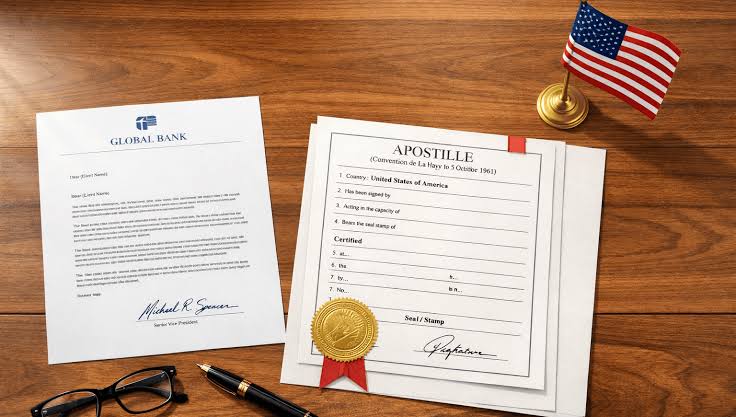
An Apostille authenticates public documents for international use under the Hague Convention, covering study abroad transcripts, foreign property transfers, and overseas employment. Because a single formatting error can trigger weeks of administrative delays, specialized mobile apostille agents manage the entire process. They review documents for initial compliance, perform correct notarizations, coordinate hand-carry or express submission to state or federal agencies, and deliver finalized international legalizations back to the client.
Estate Planning Execution
Mobile estate specialists handle complex multi-signature document packages like Revocable Living Trusts and Healthcare Directives. They travel directly to vulnerable or medically fragile signers, manage strict witness requirements, and ensure documents are executed flawlessly without causing unnecessary stress to families.
Remote Online Notarization (RON)
Using live audio-video technology and digital identity proofing, certified RON specialists execute legal paperwork securely from anywhere. This borderless convenience allows out-of-state home buyers, deployed military members, and international executives to finalize critical documents instantly without travel delays or international courier fees.
Catching Costly Errors Before Documents Leave the Table
Mobile notaries act as crucial quality-assurance inspectors in the field. Catching paperwork mistakes at the table prevents loan funding cancellations, expired rate locks, and severe legal delays.
The “Right to Cancel” Rescission Window
On refinance and home equity transactions, federal law provides a three-day right of rescission. Pre-printed document dates that miscalculate Sundays or federal holidays can freeze loan funding. Mobile signing agents audit the Notice of Right to Cancel against the federal calendar before leaving the table, ensuring the rescission window is legally exact.
Missing Non-Borrowing Spouse Signatures
In marital or community property states, a non-borrowing spouse must sign specific security instruments to clear property title. When lenders fail to print signature lines for non-borrowing spouses on Deeds of Trust or Closing Disclosures, trained mobile notaries identify the omission, insert necessary signature blocks, and execute the required paperwork.
Name Discrepancies Across Document Sets
Differences between a driver’s license (“Jonathan A. Smith”), a property deed (“Jonathan Alan Smith”), and loan paperwork (“Jon Smith”) cause county recording clerks to reject filings outright. Mobile notaries cross-check identification against all document lines during the initial ID review, utilizing signature affidavits and executing proper “Also Known As” (AKA) or “Formerly Known As” (FKA) attestations.
Defective Statutory Notary Certificates
Out-of-state attorneys and automated online document generators frequently print outdated or generic notary blocks that miss mandatory state-specific wording, such as venue declarations or appearance methods. Experienced mobile notaries review pre-printed certificates and attach state-compliant loose certificates whenever statutory language is missing.
Witness Disqualifications
State statutes strictly regulate who can witness a Last Will and Testament or Power of Attorney. Using named beneficiaries or family members as witnesses can legally invalidate provisions of an estate plan. Mobile notaries pre-screen appointments to confirm witnesses are independent, disinterested adults, bringing qualified third-party witnesses whenever necessary.
Managing Emotional, High-Stress Signings
Operating at a hospice bedside, an intensive care unit, or during a family dispute requires balancing compassion with uncompromising legal neutrality. In these environments, the mobile notary functions strictly as an independent state officer rather than a counselor or mediator.
Adopting an Anchored Professional Demeanor
In high-stress settings, mobile notaries maintain a calm, measured, and soft speaking tone. They acknowledge the emotional weight of the setting with warm empathy while immediately transitioning into established legal procedures, maintaining complete neutrality without offering legal commentary or personal opinions.
Maintaining Operational Neutrality
Interested parties often attempt to direct proceedings during emotional appointments. By establishing physical control of the room, communicating directly with the signer, and enforcing standard statutory checks, the notary ensures the signing remains legally sound, uncoerced, and completely objective.
Common Misconceptions About Mobile Notary Authority
Misunderstandings surrounding the legal boundaries of a notary public are common among signers. Clearing up these misconceptions protects both the client and the integrity of the document.
Unlawful Practice of Law (UPL)
Clients frequently expect a notary to select legal forms, draft contracts, or decide between an Acknowledgment or a Jurat. Unless a notary is a licensed attorney, choosing certificate types or drafting legal text constitutes the Unauthorized Practice of Law. The document owner or receiving agency must specify the required notarization type.
The Absolute Prohibition of Backdating
Signers missing crucial deadlines often ask a notary to write a past date on the certificate. Backdating is official fraud. A notary certificate must strictly reflect the exact calendar date the signer physically appeared before the notary.
Authenticating Signatures vs. Document Contents
A notary seal does not validate, approve, or guarantee the truth or accuracy of a contract’s contents. The stamp certifies exclusively that the identified signer appeared, proved their identity according to state law, and signed willingly.
Mandatory Physical or Digital Appearance
Relatives cannot sign on behalf of an absent, sleeping, or incapacitated family member. Personal appearance before the notary—either physically or through an approved Remote Online Notarization audio-video platform—is a strict statutory requirement.
Understanding Travel and Convenience Fees
Clients sometimes confuse state statutory fee caps (which regulate the notary stamp itself) with mobile travel fees. State laws permit mobile notaries to charge separate, unbundled travel and convenience fees to cover door-to-door transit, mileage, and administrative time. Furthermore, because travel fees compensate the agent’s time and travel rather than a guaranteed stamp, a notary is legally required to collect travel fees even if the notarization must be refused due to lack of capacity, missing IDs, or coercion.
Navigating Out-of-State and International Document Nuances
Handling paperwork intended for another state or foreign jurisdiction requires meticulous attention to detail to prevent formal rejection by receiving authorities.
Correcting Venue Declarations
Out-of-state paperwork often arrives with the venue pre-printed to reflect where the document was generated (e.g., “State of New York, County of New York”). The venue must explicitly state where the notarial act physically takes place. The notary must strike through incorrect state and county listings, write the correct local jurisdiction, and initial the correction.
Mandatory Statutory Disclaimer Formatting
Specific jurisdictions require mandatory statutory disclaimers on notary certificates, such as explicitly stating the method of appearance (physical presence vs. online notarization) and the exact type of identification produced. If out-of-state forms lack these required fields, the notary must insert them or attach a fully compliant loose certificate.
Language Barrier Strictures
When dealing with foreign language documents, state statutes generally permit a notary to proceed if the notary certificate itself is in English. However, if the signer and notary cannot communicate directly in the same language without an interpreter, the notary cannot proceed and must refer the client to a bilingual notary.
Apostille and Embassy Preparation
Documents destined for international authentication must meet strict physical standards. Notary seals must be clean, crisp, and never placed over text or margins. Signatures must match the notary’s commissioned name exactly, and attached loose certificates must be explicitly cross-referenced to prevent rejection by state Secretaries of State or foreign embassies.
How Modern Technology Powers Mobile Operations
Top-tier mobile notaries operate as tech-enabled mobile managers, using specialized hardware and software to streamline workflows, protect non-public personal information (NPI), and eliminate administrative friction.
Logistics and Automated Dispatch
Mobile notaries use digital scheduling portals where clients select service types, enter location details, and upload document information in advance. Route optimization software calculates efficient driving paths with built-in buffer windows, while automated integration engines send clients real-time text updates and GPS tracking links prior to arrival.
Mobile Hardware and On-Site Execution
In the field, mobile agents leverage technology to maintain security and speed:
- Mobile scanners read embedded barcodes on state driver’s licenses to verify security features and auto-populate notary e-journals.
- Vehicles equipped with mobile power stations and dual-tray laser printers allow loan signing agents to print updated lender packages directly from their cars when last-minute doc changes occur.
- Portable sheetfed scanners and encrypted mobile hotspots allow instant document scans to be transmitted securely to lenders immediately following a signing.
Encrypted e-Journals and Business Management
Digital, state-compliant electronic journals utilize cloud encryption, biometric security, and digital signature capture. Specialized notary accounting software automatically tracks GPS mileage for tax deductions, manages invoices, and separates taxable travel fees from statutory notary fees.
Remote Online Notarization Platforms
RON platforms integrate multi-layered security protocols to execute borderless digital signings:
- Knowledge-Based Authentication (KBA) and dynamic credential analysis forensically verify government IDs and signer identities before video sessions begin.
- Encrypted X.509 Digital Certificates seal completed digital PDFs, making any subsequent attempt to alter the document immediately visible as a tamper alert.
- Secure cloud vaults archive required audio-visual session recordings in compliance with long-term state record-retention laws.
Data Privacy and Security Compliance
Mobile notaries handle highly sensitive financial, legal, and medical data. To maintain compliance with privacy standards such as the Gramm-Leach-Bliley Act (GLBA) and title industry best practices, mobile operators utilize end-to-end encrypted messaging for document transmission and enforce strict clean-device policies—deleting temporary local digital files and shredding physical backup paper immediately after transaction completion.
Trust Hillsborough Notary for Your Mobile Notarization Needs
Mobile notary services provide far more than a simple stamp—they deliver legal precision, specialized expertise, and operational peace of mind directly to your door. Whether you are navigating complex estate planning documents, closing on a property, executing a power of attorney, or securing an international Apostille, working with a dedicated mobile professional ensures your critical paperwork is handled correctly the first time. When you need seamless, confidential, and professional document execution, Hillsborough Notary is ready to serve you on your schedule. To book your appointment or speak directly with an expert mobile notary, contact Hillsborough Notary on WhatsApp at https://wa.me/8133006015 or visit our website at https://hillsboroughnotary.com/ today.