Learn what is an apostille? If you are currently preparing to move abroad, planning a destination wedding, or chasing dual citizenship, you have likely run face-first into a baffling bureaucratic requirement: you need to get an “Apostille” for your documents.
For most people, this word appears out of nowhere, usually accompanied by an urgent deadline from a foreign government or immigration official. The sudden scramble to figure out what it means, where to get it, and how to do it correctly can turn an exciting life milestone into a logistical nightmare.
Understanding what an apostille actually is, why foreign entities demand it, and how to avoid the catastrophic bottlenecks that derail thousands of international plans every year is essential to keeping your timeline on track.
The Most Common Misconception: Notary vs. Apostille
The single greatest misunderstanding consumers have is assuming that because a document has already been notarized, it is ready to go abroad. Many people treat the word “Apostille” as a fancy, high-level synonym for a notary seal.
This assumption is a critical mistake. A notary public simply verifies the identity of the person signing a document within their local jurisdiction. A foreign government official in Italy, Spain, or Colombia has no idea who a specific local notary is, nor do they have a way to verify if that notary’s commission is valid or active.
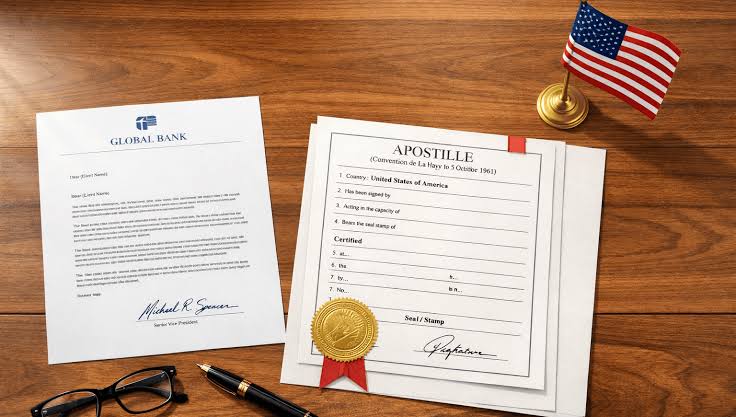
An apostille is a form of international authentication issued by a designated government authority—typically the Secretary of State. The apostille does not validate the contents of your document; rather, it officially certifies the authenticity of the signature, seal, and authority of the notary public or public official who signed it. Think of it as a security clearance pipeline: the notary verifies you, and the Secretary of State verifies the notary. Only after that second layer of validation is complete will a foreign country legally recognize your paperwork.
Why Demand Is Skyrocketing: The Modern Triggers
The need for international document authentication has exploded recently, driven by specific structural shifts in how we work, travel, and trace our heritage. If you find yourself needing an apostille, it is almost certainly due to one of three major modern triggers.
Digital Nomad Visas and Remote Work
The global workforce has detached from traditional offices. Countries worldwide have capitalized on this by introducing dedicated Digital Nomad Visas. Whether you are setting up a laptop on a beach in Costa Rica or moving your family to Spain, foreign immigration offices demand airtight proof of your background and financial stability before they will grant residency. You will almost certainly need an Apostille for FBI background checks, bank statements, and employment verification letters.
The Dual Citizenship Boom
Tens of thousands of Americans are actively pursuing dual citizenship annually, heavily concentrated in European countries like Italy, Spain, and Portugal. Programs such as Italian Jure Sanguinis or the Spanish Democratic Memory Law offer powerful pathways to a second passport, but they require a flawless, multigenerational paper trail. To claim citizenship by descent, you must present birth, marriage, and death certificates for every single person in your lineage line, alongside official documents from the National Archives or US Citizenship and Immigration Services. Every single one of these pieces of paper must be apostilled.
Destination Weddings
Tying the knot legally in places like Europe, the Caribbean, or Mexico involves navigating strict foreign municipal laws. These regulations are designed to prevent issues like bigamy or illegal marriage between relatives. To prove your identity and current legal capacity to marry, foreign authorities require a suite of authenticated documents, which typically include long-form birth certificates, single status affidavits, and final divorce decrees or death certificates if you have been married before.
International Education
Students heading overseas to attend universities or complete study abroad programs face similar hurdles. Foreign academic institutions require American diplomas and transcripts to be properly notarized and apostilled before they will issue student visas or accept enrollment.
The Flawed Notary Bottleneck
When people realize they need an apostille, their first instinct is often to try a DIY approach—printing out forms, mailing their original documents to the Secretary of State in Tallahassee, and hoping for the best.
This DIY approach is where international plans frequently fall apart. Roughly 80% of all apostille requests that get rejected in Florida are sent back due to avoidable notary errors. This is the single greatest bottleneck in the entire authentication pipeline.
The Florida Secretary of State maintains an incredibly strict, zero-tolerance policy for flawed notary blocks. If a notary omits a single required word, uses outdated statutory language, forgets to state whether physical presence or online notarization was used, or makes a minor clerical slip, the state will reject the document outright.
When consumers try to mail documents to the state themselves without a professional, pre-submission review, they face a massive failure rate. To make matters worse, they usually will not discover the rejection until a two-to-four-week delay has passed, only to receive their unauthenticated paperwork back in the mail with their deadlines blown.
When Minutes Count: A Case Study in Mid-Air Execution
The absolute necessity of expert execution becomes clear when a timeline leaves zero margin for error. Mailing documents and waiting weeks is a luxury many travelers simply do not have.
Consider a situation where a client called us directly from an airplane. He and his wife were mid-flight, landing in Italy in a few hours, when they realized they were missing a vital requirement: they needed an apostille of their marriage license by the very next day to satisfy local Italian authorities.
While they were in the air, the advantage of professional legal document familiarity came into play. Using the Clerk of Court’s online ordering infrastructure, we were able to secure a certified copy of their marriage license within 30 minutes. From there, our agent hand-carried and expedited the apostille through the state channels that same day.
By the time the couple’s plane touched down and they reached their destination, the fully authenticated apostille was ready and delivered to meet their exact time requirement. Attempting to navigate that via mail or without direct, on-the-ground knowledge of court and state processing systems would have resulted in an automatic failure.
The Strategic Next Step for Your Timeline
If you have just realized that your upcoming international transition requires an apostille, the worst thing you can do is start printing random forms or mailing original, irreplaceable documents blindly.
A high-quality apostille agent does far more than just mail paperwork. They understand the hyper-specific, shifting nuances of what the Secretary of State requires, and they can look at your documents upfront to catch the notary errors that trip up 80% of everyday consumers.
Because an international move, wedding, or citizenship application is ultimately a complex logistical puzzle, it needs to be treated like one. As an apostille agent who is also a Certified Project Management Professional (PMP), I look at document authentication through the lens of project risk management. We map out the dependencies, evaluate the document types, verify the notary compliance, and build a structured plan with guaranteed timelines.
Before you drive to a local office or risk sending your documents into a weeks-long government backlog, schedule a professional consultation. Review exactly what you have, identify what is missing, and establish a bulletproof plan to ensure your paperwork is legally recognized exactly when you need it.