
The world of professional document authentication is undergoing a massive digital shift. For decades, getting a legal document notarized meant one of two things: driving across town to sit in a bank lobby, or paying a mobile notary to meet you face-to-face at a home, office, or hospital. Today, a modern alternative completely eliminates the logistical headaches of physical paperwork and travel. It is called Remote Online Notarization, commonly known as RON.
To put it in the simplest terms, a traditional mobile notary brings the paperwork to your door, whereas a RON session brings the notary to your screen. Both methods result in a document that is equally legal and fully binding, but RON cuts out the travel time, physical paper clutter, and coordination delays entirely.
Instead of an in-person meeting, the entire transaction takes place electronically via a secure, live audio-video call on a computer or tablet. It looks and feels very similar to a standard Zoom or FaceTime meeting, but it is built on top of a highly regulated, secure digital infrastructure designed to verify identities and protect document integrity.
How Identity Verification Works Online
A common misconception is that remote notarization is less secure than meeting face-to-face. In reality, the security protocols governing RON are significantly more rigorous than traditional paper-based methods. In a physical setting, a notary simply glances at a driver’s license or passport, compares the photo to the person standing in front of them, and proceeds to execute the document.
With RON, identity verification is an automated, multi-step process that occurs before the live video call even begins. First, the signer must complete a digital credential analysis. The platform prompts the user to capture a high-resolution image of the front and back of their government-issued ID using a smartphone camera or webcam. The software instantly runs forensic algorithms in the background, analyzing micro-print, watermarks, and security features to verify that the identification card is entirely authentic and unaltered.
Second, the signer must pass an automated identity proofing step known as Knowledge-Based Authentication. The system pulls historical data from public records and credit bureaus to generate five multiple-choice questions unique to the signer’s past, such as previous addresses, vehicle registrations, or past employers. The signer operates under a strict two-minute countdown timer to answer these questions. This tight window ensures that only the actual owner of that identity can complete the quiz, effectively blocking identity thieves from searching for answers online.
Signing and Sealing in the Digital Age
Once the identity checks are passed, the signer enters the virtual room to connect with the notary. The signing process itself completely eliminates the need to print, manually sign, or scan physical paper. The signer views the document directly on their screen, and the platform guides them through the mandatory signature blocks.
Instead of using a pen for a wet-ink signature, the client simply clicks an interactive button to apply a secure digital signature. The notary then attaches an encrypted electronic seal and a specialized digital certificate directly to the electronic record.
This digital seal relies on Public Key Infrastructure technology, which makes the final document completely tamper-evident. Under Florida law, if anyone attempts to alter a single digit, name, or punctuation mark in the PDF after the notarization is finalized, the cryptographic seal instantly breaks. This creates an immediate visual alert for anyone viewing the file, rendering the fraud useless and providing a level of security that physical paper can never match.
Seamless Consumer and Global Turnaround Times
For an individual consumer, the actual experience of a RON session is incredibly fast and stress-free. The entire three-phase process—intake, virtual signing, and document download—typically wraps up in less than 10 minutes total, especially when you follow clear remote online notarization step-by-step instructions to prepare your documents. The initial anxiety about technical hoops vanishes the moment the client realizes they do not need to print out pages or struggle with software. They can legally execute critical, high-stakes real estate or legal documents from their living room couch, completely bypassing traffic and scheduling conflicts.
Ready to prepare for your upcoming virtual signing?
Review our complete guide to remote online notarization services and setup instructions to ensure a flawless session.
This digital speed becomes a massive operational advantage when handling international transactions. For clients throughout Latin America and elsewhere globally who require expedited document authentication, traditional mail-away methods can take weeks of international shipping. Because Florida online notaries are authorized to notarize documents for signers located anywhere in the world, RON collapses these timelines down to a single day.
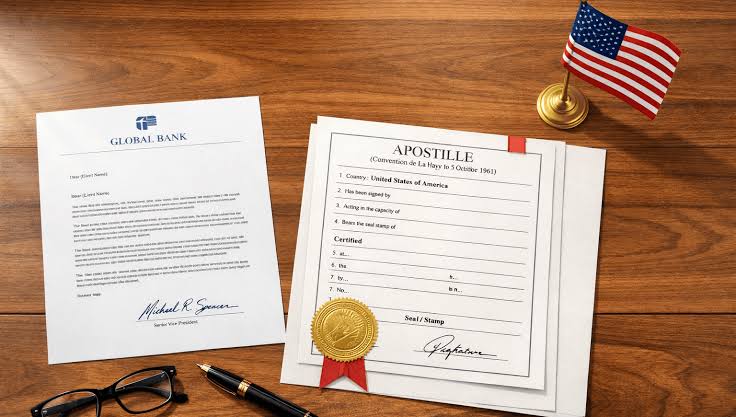
For example, in a recent real estate transaction in Bogota, Colombia, a buyer urgently needed notarized and apostilled copies of powers of attorney, income verifications, and bank statements to close on a property. By utilizing Remote Online Notarization, the documents were securely signed and legally notarized the very same afternoon. The digital files were immediately pushed into an expedited apostille workflow, meeting a critical international deadline that would have been impossible to hit using traditional paper mail.
Institutional Returns: Zero Friction and Lower Risk
For corporate clients, title companies, and legal professionals, shifting to a fully digital RON workflow introduces a massive administrative advantage: the complete elimination of operational friction and post-closing liabilities caused by human error. While individual consumers value RON for its sheer convenience, institutional players reap compounding financial and administrative returns across the entire life cycle of a document.
In a traditional paper or hybrid workflow, a single transaction requires printing hundreds of pages, paying for trackable overnight couriers, and covering mobile notary travel fees. When a firm transitions to RON, these infrastructure costs evaporate. More importantly, it accelerates capital velocity. In corporate banking and real estate, a paper document stuck in transit delays funding and extends the utilization of warehouse lines of credit. RON allows finance teams to execute, verify, and fund a file in the same business afternoon.
RON also solves one of the most expensive headaches for title companies and law firms: the missed signature. Resolving a missed initial or a blank checkbox discovered during a post-closing audit requires tracking down the client, scheduling a second mobile notary visit, and paying double shipping—all while the transaction sits in legal limbo. RON platforms solve this programmatically by treating signature lines and date blocks as mandatory fields. The system physically prevents the signer or the notary from concluding the session if a single required element is blank, ensuring a 100% completion rate on the first attempt.
Finally, RON transforms long-term record keeping from a physical archiving burden into a bulletproof compliance vault. Instead of paper journals that offer little context years later, a legally compliant RON transaction archives a comprehensive forensic audit trail. This includes the tamper-evident PDF, the electronic journal entries, the ID forensic check results, and the mandatory 10-year audio-video recording of the live session. If a transaction is ever questioned, compliance teams can instantly pull up the exact video session from a secure cloud archive, converting a fragmented, error-prone manual process into a predictable, legally bulletproof closed loop.